

Girls leave sport twice as fast as boys. Nobody has measured it in Idaho.
Here is the single most important statistic in girls' sport, and here is the problem with it.
The Women's Sports Foundation reports that girls leave sport at twice the rate of boys by the age of fourteen. The Aspen Institute has published 1.3 times.
Both are credible national organizations. Both are working from real data. They disagree by almost a factor of two on the number the entire field is built on.
And neither of them publishes anything for Idaho.
Why we cite both
We could pick the bigger number. It makes a stronger case and nobody would check.
We cite both, in fine print, on our research page — because the spread between them is itself the argument. If two serious organizations cannot agree within a factor of two on how fast girls leave sport, the honest conclusion is not that one of them is right. It is that this has not been measured well enough, by anybody, for anyone to be confident.
That is a finding. It just is not the finding people want.
The window everybody agrees on
What the sources do agree on is when. The attrition happens between roughly twelve and fourteen — the years when sport stops being something everybody does at break time and becomes something you have to choose, try out for, pay for, and get driven to.
It is also when the cost curve steepens. Recreational leagues give way to club fees, travel and tournament weekends. A sport that cost a registration fee at nine costs considerably more at thirteen.
So whether the ratio is 2× or 1.3×, the intervention point is the same, and it is not a mystery.
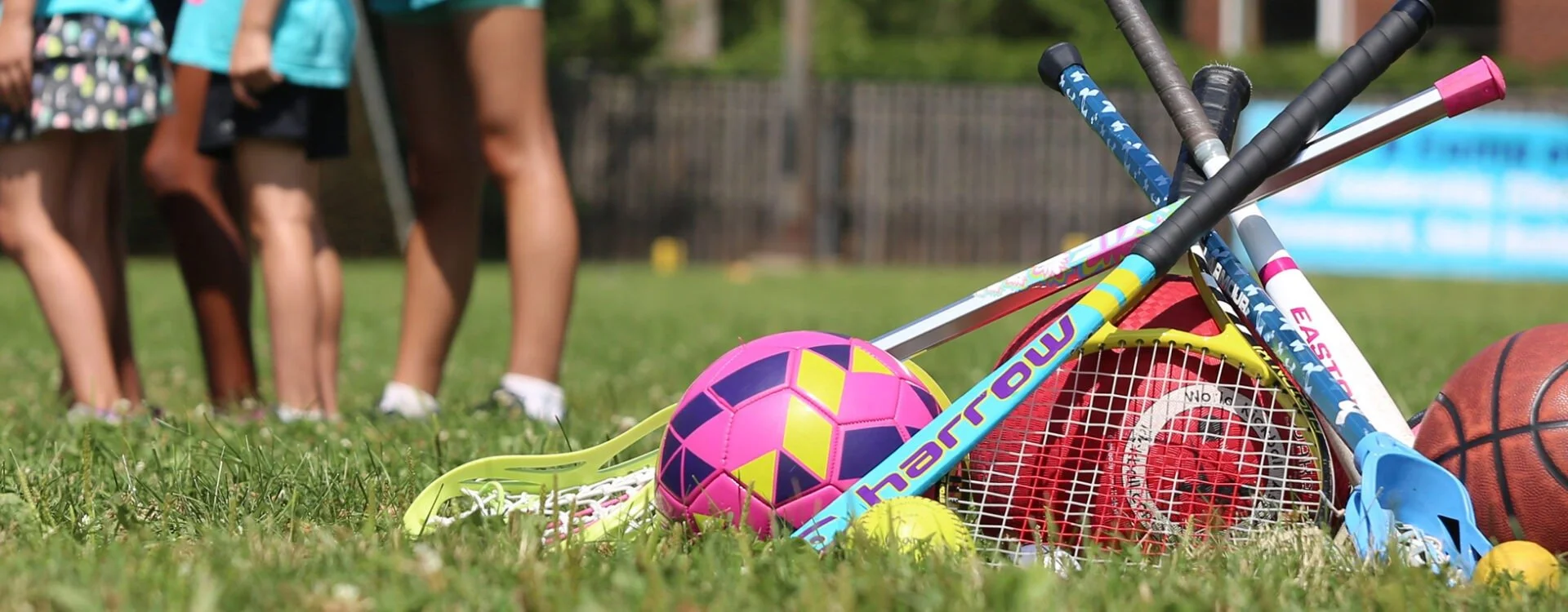
Ages twelve to fourteen — the window where the numbers turn
What Idaho actually has
We know how many Idaho students play high school sport, because the National Federation of State High School Associations counts it every year and publishes it by state.
What nobody counts:
How many Idaho girls start a sport and stop before high school
Whether that rate differs between Boise and Salmon
What a season costs an Idaho family, all in
What happens to a girl who is funded into one season — whether she comes back for a second
That last one is ours to answer and we have not answered it. We funded twenty girls into Girls on the Run this year. We do not know how many will return next year, we have not built the tracking, and we will not claim a retention rate we have not measured.
What we are doing about it
Two things, and neither is a study.
We fund the barrier people name. When women are asked what stopped them participating fully, family finances comes first, at 27 percent (Women's Sports Foundation, Play to Lead, 2024). So iWIN IX Grants pay registration, shoes, league dues and travel — the specific unglamorous things — rather than running a confidence curriculum.
And we publish what we do not know. Every figure on our research page carries its source, its date and its limitations. Where two sources conflict, we show both. Where we have nothing, we say so.
That is a small thing. But the reason nobody has Idaho numbers is partly that nobody has treated the absence as worth mentioning.
If you have this data
If you run a league, a club or a district that tracks girls' participation year over year, we would like to hear from you. Even partial data from one town would be more than the state currently has.
We are not going to pretend to a number we do not have. We would much rather go and get one.
Every figure we publish, with its source → · Fund a season — $115 → · Have participation data? hello@taylorleadscholarship.com