

"If She Can See It, She Can Be It" Is a Slogan. Here Is the Part That Is Measurable.
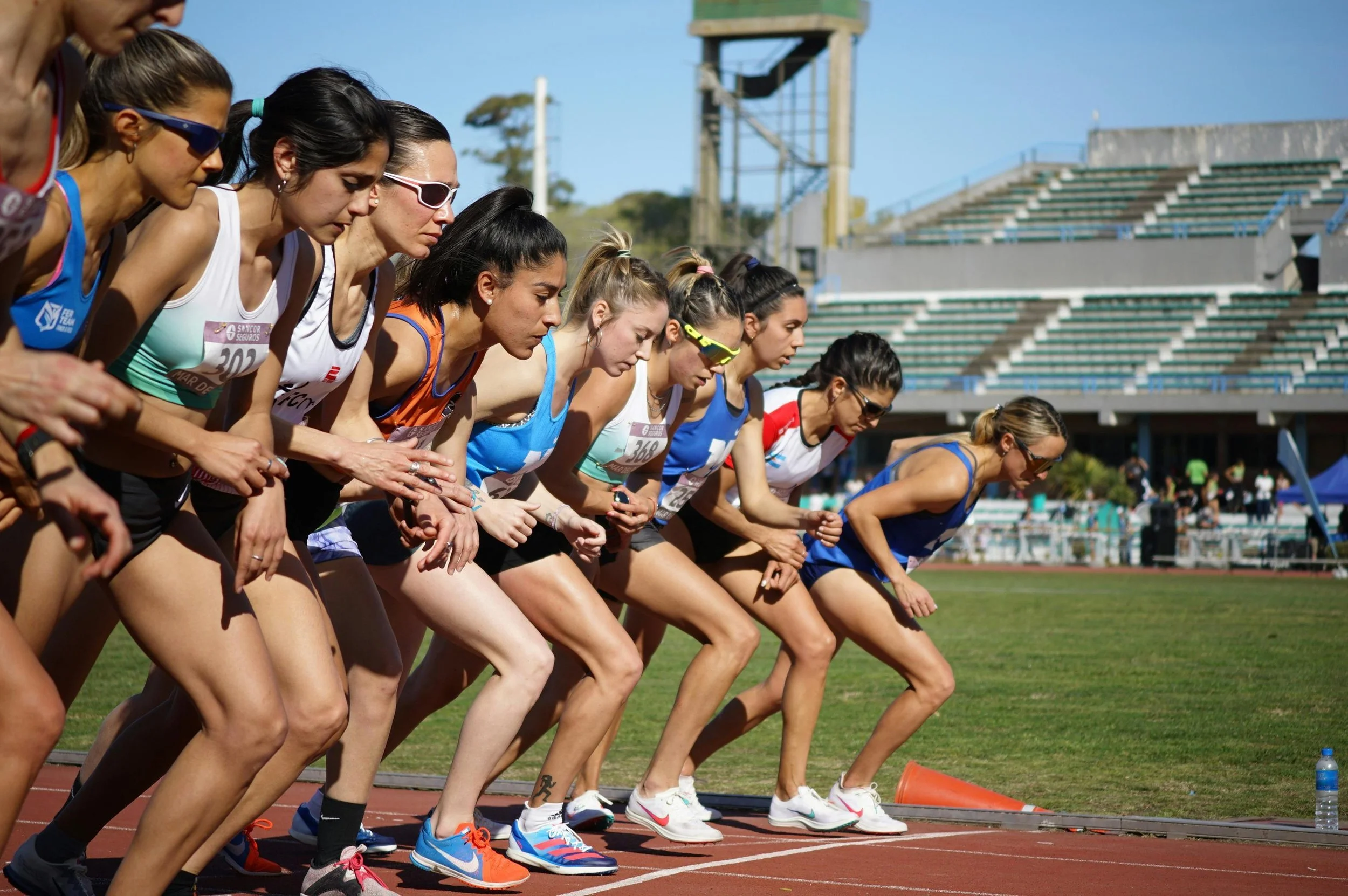
"If she can see it, she can be it" is the most repeated sentence in girls' sports advocacy. It is also, as stated, an untested claim. It gets repeated because it feels obviously true, which is exactly the condition under which organizations stop checking.
We use it. We should be honest about which parts of it the evidence carries.
What the leadership research supports
The Women's Sports Foundation's 2024 Play to Lead report is the strongest source available on sport and women's leadership: 2,886 nationally representative respondents who played on girls' or women's teams, fielded by YouGov, IRB-reviewed.
Among the findings:
69.1% held at least one formal leadership role outside the family
48.6% credit the skills they acquired through sport for their leadership development
67% report carrying skills from sport into adulthood
Of those who held a formal leadership role, 70.7% reached titles from manager through the C-suite. Against the full sample, that is 54.2%
That last distinction matters, and it is routinely mangled. The 71% figure circulating widely is not 71% of women who played sports. It is 71% of the subset who held a formal leadership role. Anyone who opens the report finds this in under a minute.
The most quoted statistic in the entire field, that 94% of women in the C-suite played sport, comes from EY's Women Athletes Business Network and espnW in 2015. It is not wrong. It is also eleven years old, drawn from roughly 400 self-selected senior executives across five countries, correlational, and it circulates in several variants from the same research program. We cite it, attributed, and we do not lead with it.
Notice what none of these establish: that seeing a woman lead causes a girl to lead. They establish that participation and leadership travel together. The causal arrow, and the role visibility plays in it, is not settled by this data.
What visibility plausibly does
The honest version of the mechanism is narrower and still worth acting on.
Girls make decisions about whether a space is for them long before they have evidence either way, and they make those decisions from available signals. A girls' program with no women coaching it is a signal. A high school where the boys' schedule is on the marquee and the girls' schedule is on a photocopy is a signal. A gym with championship banners for one gender is a signal.
Visibility does not manufacture ambition. It removes a reason to rule yourself out. That is a smaller claim and a defensible one.
The Idaho version of this question
Idaho recorded 23,423 girls' high school sports participations in 2024–25, against 31,440 for boys, a gap of 8,017. Idaho ranks 36th nationally in overall participation.
The survey counts participations rather than individual students, so a three-sport athlete appears three times. The count of individual Idaho girls playing is lower than 23,423 and nobody publishes it.
The sport-level distribution is genuinely useful for anyone thinking about where visibility efforts land. Volleyball (4,154) and outdoor track and field (4,101) are effectively tied at the top, followed by basketball (3,027), soccer (2,252), fast-pitch softball (2,083), competitive spirit (1,820), cross country (1,470), tennis (1,411), wrestling (848), dance (768), golf (763), and swimming and diving (661).
If you are trying to put a woman in front of Idaho girls, volleyball and track reach the most of them. If you are trying to reach the girls with the thinnest existing support structure, look at the bottom of that list.
Visibility is a construction project
Representation does not accumulate on its own. It is produced by specific decisions made by specific people.
Hiring and retaining women coaches. Scheduling girls' games in the good gym at the good hour. Putting women in front of mixed audiences rather than only girls' audiences, since boys' assumptions about who belongs in sport shape girls' experience of it. Telling stories about women whose careers were built through sport rather than in it.
The Changemakers Circuit is our version of this. It brings women in sport and leadership, and men who advocate for women and girls in sport, into Idaho schools, organizations, and community events. Sessions have been delivered at Mountain Home High School, where the Activities Director has since provided a testimonial. Sessions start at $500 for a 30-minute keynote or speaking appearance, and we work with schools where that is not workable.
Bookings go through hello@taylorleadscholarship.com.
The honest close
We are not going to tell you that one assembly changes a girl's life. We do not have that evidence and neither does anyone else who says it.
What we will say is this: a girl deciding whether a room is for her is reading the room. It costs us very little to make sure the room says yes.
Sources: Sharrow E, Staurowsky E, Davis B. Play to Lead. Women's Sports Foundation, September 2024. EY Women Athletes Business Network and espnW, Where Will You Find Your Next Leader?, 2015. National Federation of State High School Associations, High School Athletics Participation Survey, 2024–25.