

Camps Are Not About the Summer. They Are About Ages 12 to 14.
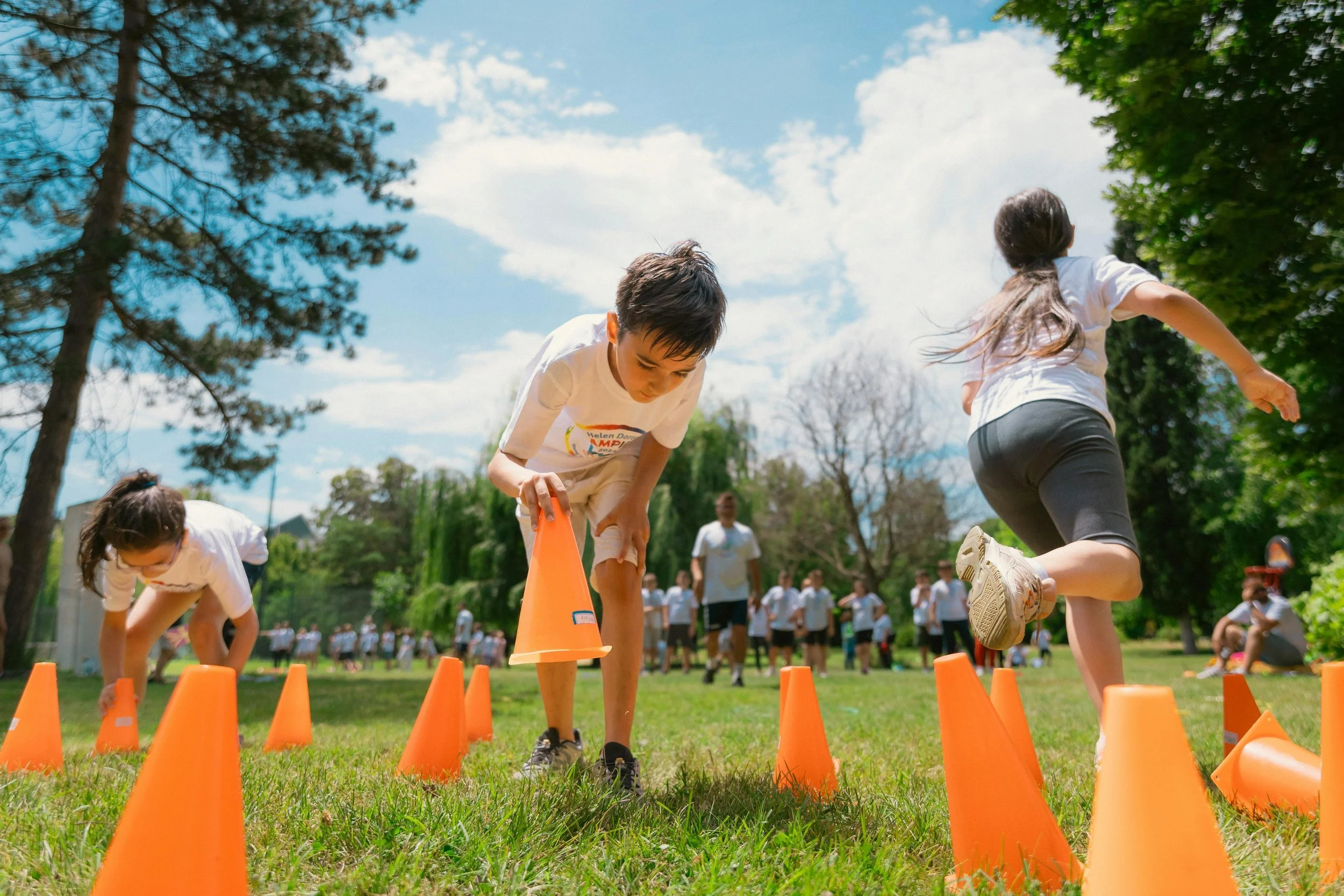
The usual argument for sports camps is that girls gain confidence, friendship, resilience, and joy. That argument is correct and almost useless, because it applies equally to a camp for eight-year-olds, a camp for high school seniors, a theater program, and a summer job.
The specific argument is better. It concerns a narrow age band, a measurable drop, and a finding about duration that turns a nice-to-have into a priority.
The window
Girls leave sport at roughly twice the rate of boys by age 14, according to the Women's Sports Foundation.
We should be straight about the quality of that number. The Aspen Institute has published 1.3 times for the same phenomenon. We cite both, because two credible national organizations disagreeing by nearly a factor of two on the single most important attrition statistic in the field is itself worth knowing. Neither publishes anything for Idaho specifically. That gap is a large part of why a state-level research effort is something we plan to build. It does not exist yet.
What is not in dispute is the direction and the timing. Early adolescence is when the leaving happens, and it happens faster for girls.
The reasons are well documented and rarely singular: bodies change, competition sharpens and cuts begin, costs climb as travel programs replace recreational ones, social stakes rise, and the sport stops being something you simply do and starts being something you have to be good at.
Why duration is the outcome that matters
From the Women's Sports Foundation's 2024 Play to Lead report: women who held formal adult leadership roles had played sports for an average of eight years. Those without such roles averaged six.
That single comparison is the reason our programming concentrates where it does. If the benefit accrues with seasons played, then the highest-value thing any program can do is prevent an exit. A camp that brings a thirteen-year-old back for one more season has done more measurable good than a clinic that teaches a superior jump shot to a girl who was never going to quit anyway.
Retention is the product. Skills are the delivery mechanism.
What a camp built for retention does differently
Multi-sport, not single-sport. A girl who is being quietly edged out of one sport has somewhere else to land. Early specialization is a documented exit ramp, and a multi-sport format is a direct counterweight.
Belonging as the design constraint, not the byproduct. Rosters mixed so no one arrives friendless. Groups by stage rather than by ability where possible. Enough coaches that no participant goes an entire session without being addressed by name.
Repetition with visible failure built in. Confidence is not produced by succeeding on the first attempt. It is produced by failing, adjusting, and succeeding, in a setting where the failure was normal and public and nothing bad happened.
Cost that does not decide who attends. IX Camp Scholarships exist so that the registration fee is not the selection mechanism. Family finances are the most-reported barrier in the national data, at 26.7%.
Year-round contact. A once-a-summer touch cannot hold a girl through a February in which she is thinking about quitting. Continuity is the mechanism.
What we are running in the Treasure Valley
Game On! Sports Camps 4 Girls, Boise is a multi-sport experience for girls across the Greater Boise Area, powered by iWIN Sports.
Year-round clinics are active beginning fall 2026, starting with the Throw Like a Girl series, three clinics running September through November. Full summer camps launch in Summer 2027. We moved camps from 2026 to 2027 deliberately, to give families, schools, and volunteers a real runway rather than a rushed first season.
Clinics are not a marketing exercise ahead of the camps. They are the proving ground: the volunteer program, the run-of-show, and the family experience all get tested in a small setting before they get tested in a large one.
Camp scholarships are available through iWIN IX Grants, year-round through Submittable, reviewed quarterly.
What we cannot claim yet, and when we will
We do not have retention data. We have not yet run a season-over-season cycle, so any claim that our programming keeps girls in sport would be an assertion rather than a finding.
The plan is to take a first return-rate measurement from the fall 2026 clinic cohort and track it into 2027. That is an intention, not a result, and we will publish what it produces whether or not it flatters us.
Sources: Women's Sports Foundation; Aspen Institute Project Play; Sharrow E, Staurowsky E, Davis B. Play to Lead. Women's Sports Foundation, September 2024.